Inside the Quiet Wars
Big Powers Still Wage [Without Armies]
by Nthanda Manduwi [Author] | Book 6 of 7: Lessons
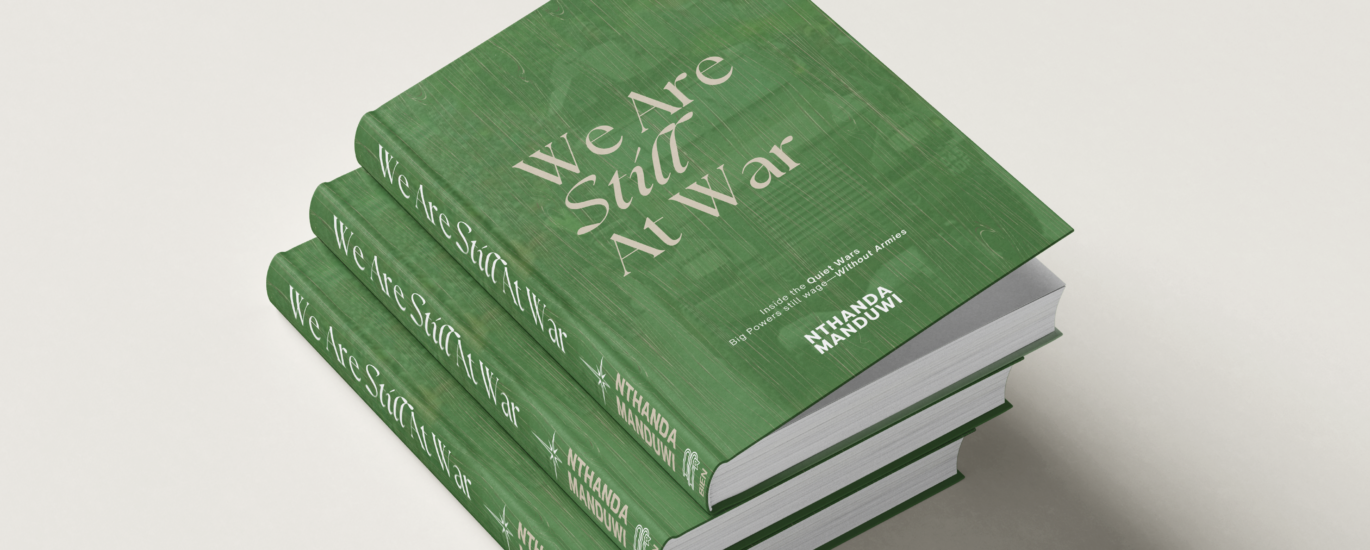
We Are Still at War is a book about the quiet wars big powers continue to wage without armies.
Beginning from Malawi, a country often described through peace, gentleness, and political calm, Nthanda Manduwi follows a harder question: what does peace mean in a world still organised through extraction, debt, dependency, trade pressure, diplomatic hierarchy, knowledge control, and economic vulnerability? The book moves beyond the battlefield to study the forms of conquest that continue after formal colonialism, often through institutions that speak the language of cooperation.
Nthanda’s perspective is shaped by travel, international relations, development work, and her own experience moving between Malawi, Cambodia, Rwanda, New York, and other global spaces where peace, power, recovery, and ambition are narrated differently. She writes as someone from a peaceful country who has come to see that peace can be a blessing and a vulnerability when the world around it remains structured by competition.
The book follows the invisible architecture of modern conflict. It looks at debt as leverage, trade as discipline, aid as influence, knowledge systems as control, diplomacy as hierarchy, and development as a field where old forms of conquest often return in quieter dress. It asks how countries can be formally sovereign and still constrained by systems that decide what they may finance, export, import, borrow, build, believe, and become.
We Are Still at War carries the moral force of its title without turning war into a metaphor for everything. It studies the practical ways power moves when armies are absent: through contracts, currencies, sanctions, lending conditions, extractive deals, institutional rankings, elite networks, and the soft authority of expertise. It gives readers a language for the pressure many Global South countries feel but are often expected to describe politely.
For readers interested in international relations, colonial afterlives, political economy, African sovereignty, debt, global governance, peace, development, and power, this book offers a clear account of conflict beyond conventional war. It is especially relevant for those who sense that the world’s most consequential battles are often fought in boardrooms, ministries, rating agencies, trade agreements, donor frameworks, and diplomatic corridors.
We Are Still at War is a serious invitation to rethink peace, power, and survival in a world where conquest has learned to travel without tanks.
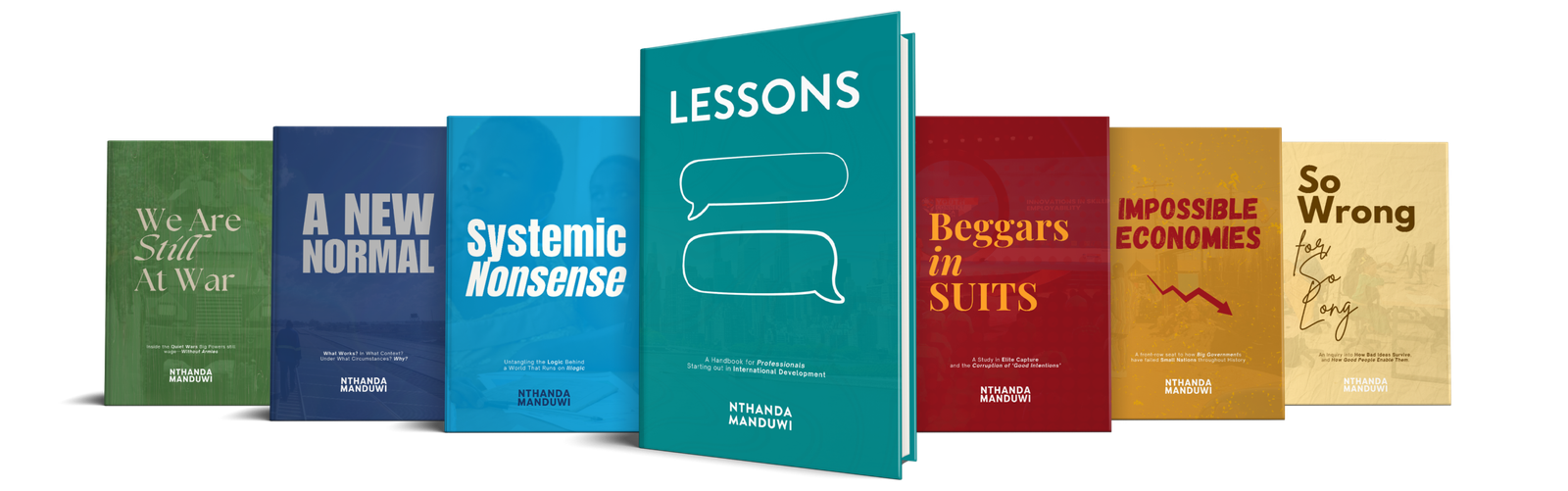
Read more about the Lessons Book Series: lessonsbooks.com
Explore the full series: