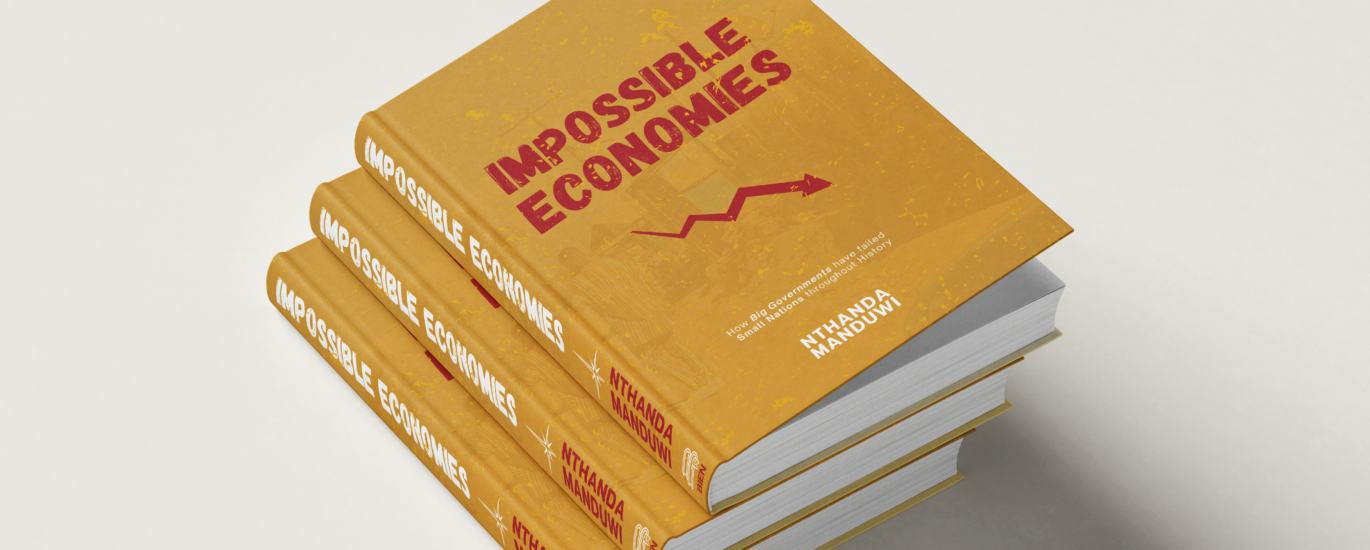
A front-row seat to how Big Governments
have failed Small Nations throughout History
by Nthanda Manduwi [Author] | Book 4 of 7: Lessons
Impossible Economies is a political-economic study of countries asked to govern realities their inherited systems were never designed to hold.
Across much of the Global South, especially in Africa, official development language often describes countries through growth rates, debt ratios, formal employment, investment flows, and institutional rankings. Daily life tells a fuller story. People survive through informal trade, kinship networks, side businesses, remittances, negotiated access, personal relationships, and constant improvisation. Governments appear large on paper and weak in practice. Societies appear informal because the formal economy has failed to absorb the intelligence, labour, and resilience already present.
Nthanda Manduwi writes from the experience of growing up in Malawi, studying economics and demography, working in government and international development, and building institutions around entrepreneurship, infrastructure, and systems change. Her vantage point allows the book to move between formal political economy and lived economic reality. It understands that the problem is rarely a simple absence of effort. Many countries are trying to govern through models, laws, institutions, and fiscal expectations that were inherited, imported, donor-shaped, or built for conditions that do not match the societies they claim to serve.
The book traces the mismatch between big-government expectation and small-nation capacity. It looks at colonial inheritance, aid dependence, informality, public finance, debt, corruption, donor incentives, institutional weakness, and the practical genius of citizens who keep economies alive outside official recognition. It asks what happens when a country is judged by frameworks that do not understand how people actually survive, create value, move money, build trust, manage risk, and make life possible.
Impossible Economies is also a book about measurement. It questions the comfort of formal indicators when so much of economic life happens beyond the state’s full view. A country can appear stagnant in one set of numbers while its citizens are working constantly. A government can appear expansive while lacking the capacity to deliver ordinary services. An economy can be described as underdeveloped while its people carry extraordinary adaptive intelligence.
For readers interested in African economies, development policy, informality, colonial inheritance, aid, fiscal constraints, and the future of small nations, this book offers a grounded account of why many economies feel impossible to govern well. It is written for people who know that policy must begin with reality, and that reality includes the markets, households, farms, roads, networks, and informal systems where people are already doing the work of survival.
Impossible Economies gives readers a language for the mismatch between what countries are expected to be and what their systems have actually made possible.
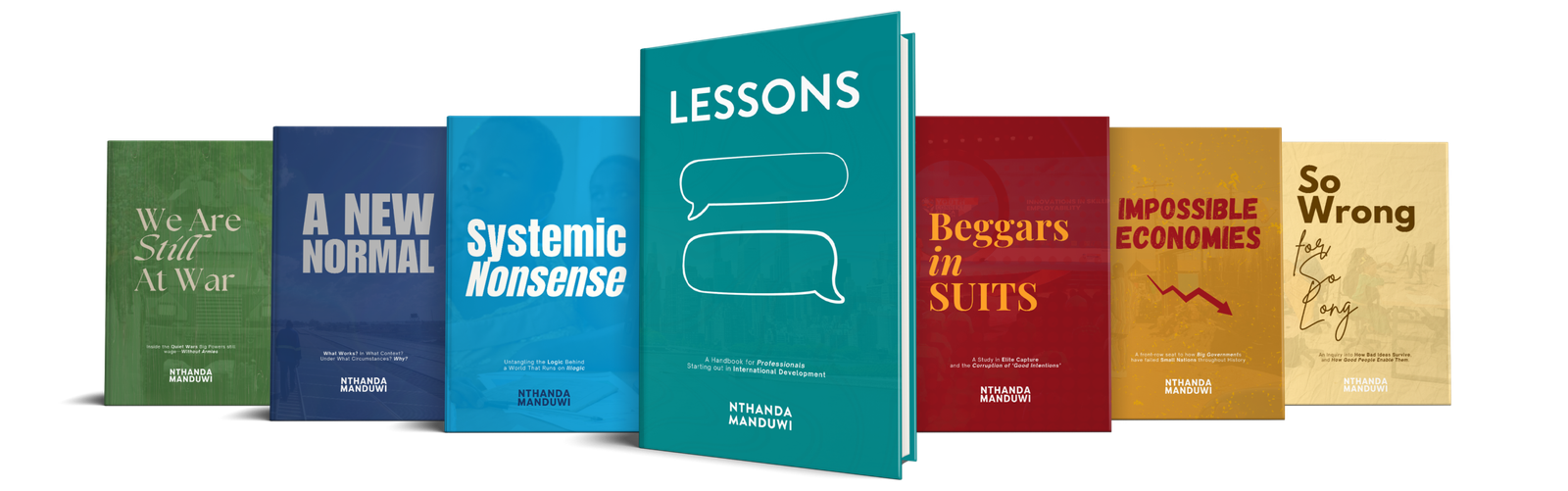
Read more about the Lessons Book Series: lessonsbooks.com
Explore the full series: